
$50.00 Original price was: $50.00.$42.50Current price is: $42.50.
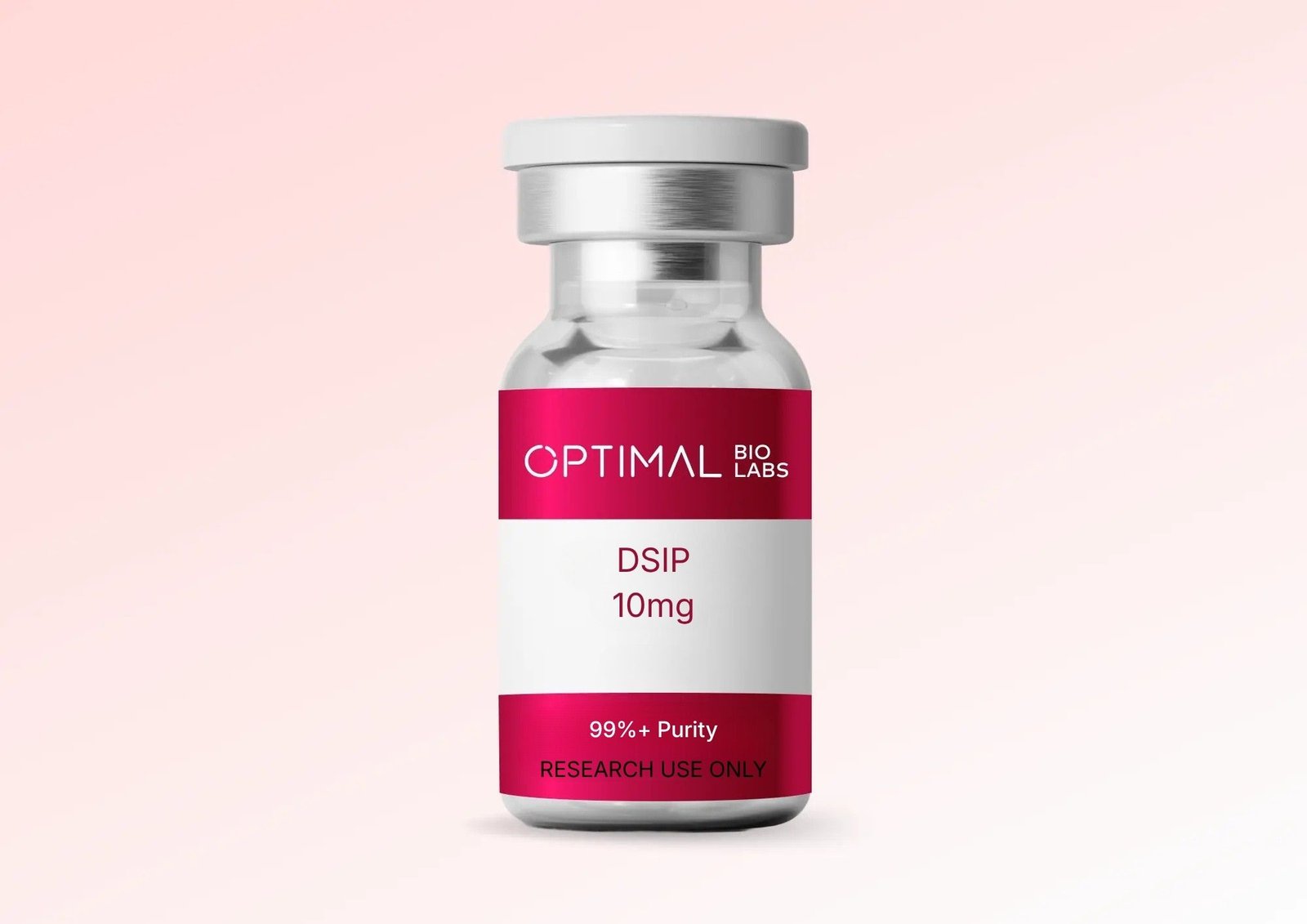
Contents: 5mg of DSIP
Form: Lyophilized Powder
Emerging Research Evidence:
DSIP is utilized in pre-clinical models as a neuroregulatory research peptide, with studies exploring its role in sleep-cycle signaling, neurotransmitter interaction, and stress-response pathways.
Keep in cool dark location.
Sold for Research Use Only / Not FDA Regulated.
In Stock — Order by 4 PM Central Time, ships today
Select quantity to unlock savings.
Note: Same-product quantities only. Not combinable with BOGO-style promotions. Eligible offers capped at 30% total savings.
Availability: Larger-volume orders are subject to current inventory.
⚠️ Requires Sterile Water for Reconstitution. Type may vary by formulation.
For laboratory use only.
DSIP Overview
DSIP is a research-grade peptide studied in laboratory models for its role in sleep-related signaling pathways, neuroregulatory activity, and stress-response research. As a naturally occurring peptide first identified in sleep-associated studies, it is commonly evaluated for how it may influence circadian signaling patterns, neurochemical balance, and recovery-related cellular activity in controlled environments.
In pre-clinical research, DSIP is often used to examine neurotransmitter interaction, sleep-cycle signaling markers, and stress-response modulation pathways. Research focuses on how this peptide may help scientists better understand neural communication, recovery signaling coordination, and system-level regulatory balance without making clinical or therapeutic claims.
DSIP Structure
CAS Number (human DSIP): 62568-57-4
(Note: Different variants may have alternate CAS identifiers)
Molecular Formula: C₃₅H₄₈N₁₀O₁₅
Molecular Weight (average): ~848.8 g/mol
Monoisotopic Mass (exact): ~848.3 Da
Parent Compound:
Delta Sleep-Inducing Peptide (DSIP), a naturally occurring nonapeptide studied for its involvement in sleep-related signaling and neuroendocrine regulation pathways.
Synonyms
• DSIP
• Delta Sleep-Inducing Peptide
• Trp-Ala-Gly-Gly-Asp-Ala-Ser-Gly-Glu
• Sleep-Associated Regulatory Peptide
Research Areas
DSIP is utilized in pre-clinical research models across the following areas:
• Sleep & Circadian Signaling Research:
Investigating how DSIP may influence sleep-cycle signaling patterns, circadian rhythm coordination, and associated neurochemical pathways.
• Neurotransmitter Interaction Studies:
Studying how DSIP interacts with central nervous system signaling molecules and receptor activity involved in regulatory balance.
• Stress-Response & Adaptation Research:
Examining signaling pathways related to stress-response modulation, neuroendocrine balance, and adaptive system regulation.
• Recovery & System Regulation Research:
Exploring how DSIP may be involved in system-wide recovery signaling, regulatory coordination, and neurobiological equilibrium.
Condensed Research Summary
DSIP is utilized as a targeted research peptide for studying sleep-related signaling activity and neuroregulatory pathway dynamics. In laboratory settings, it is often used to observe how signaling interactions influence circadian rhythm coordination, stress-response patterns, and downstream neurochemical pathways. Research remains exploratory, focusing on neural communication, pathway interaction, and system-wide regulatory responses rather than clinical or physiological outcomes.
Research-Only Notice
DSIP is intended for laboratory research use only. Not for human or veterinary consumption. Not approved by the FDA for therapeutic or diagnostic use. All referenced studies are pre-clinical and exploratory.
For Research Use Only — Not for Human or Veterinary Use. Not evaluated or approved by the FDA. Not intended to diagnose, treat, cure, or prevent any disease. All information on this website is provided strictly for laboratory research and educational purposes. Nothing herein constitutes medical, clinical, or legal advice, nor an endorsement of non-laboratory use. Any discussion of specific peptides or potential research findings is informational only and must not be interpreted as guidance for use in or on humans or animals.