
$35.00 Original price was: $35.00.$29.75Current price is: $29.75.
Bioregulator
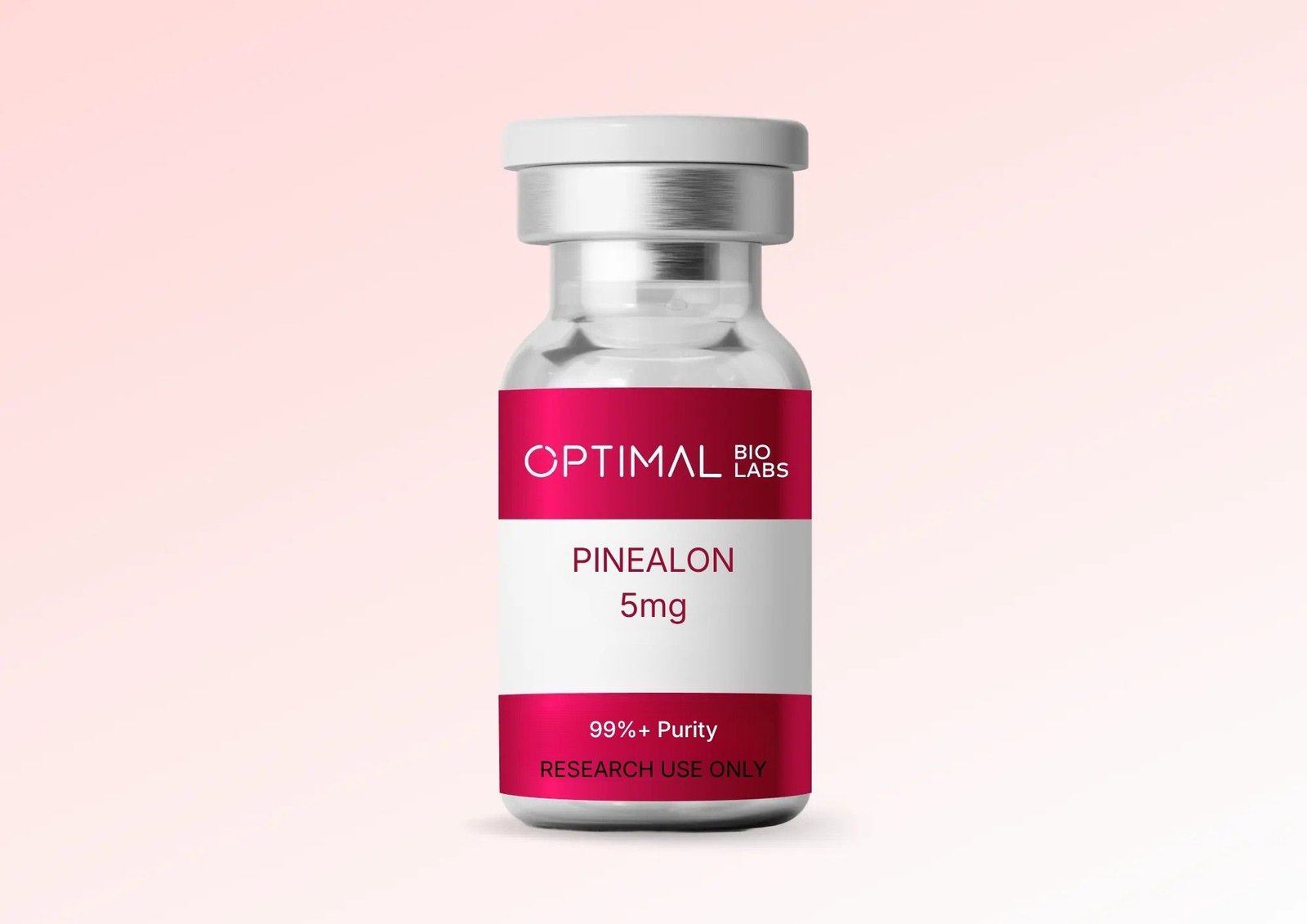
Contents: 5mg of Pinealon
Form: Lyophilized Powder
Emerging Research Evidence:
Studied for mental clarity, brain signaling, and cognitive-aging research pathways.
Keep product in cool, dark place.
Sold for Research Use Only / Not FDA Regulated
In Stock — Order by 4 PM Central Time, ships today
Select quantity to unlock savings.
Note: Same-product quantities only. Not combinable with BOGO-style promotions. Eligible offers capped at 30% total savings.
Availability: Larger-volume orders are subject to current inventory.
⚠️ Requires Sterile Water for Reconstitution. Type may vary by formulation.
For laboratory use only.
Pinealon 5mg is a specialized synthetic tripeptide utilized in laboratory models to study cognitive pathway coordination and circadian signaling balance. Due to its low molecular weight, this peptide allows researchers to observe how molecules integrate with nuclear signaling interactions and maintain intracellular harmony within a controlled environment. Investigators use this 5mg tool to track gene-expression regulation and the maintenance of neural signaling pathways.
Researchers employ Pinealon to analyze how short-chain peptide dynamics influence the timing of transcription-associated communication and pathway modulation. By mapping these nuclear signaling cascades, investigators gather technical data on how cells manage neuro-synchronization and maintain biological agility at a molecular level.
Current studies focus on exploring the mechanisms of signal specificity and cellular response patterns. This 5mg vial provides a robust technical framework for investigating the delicate signaling networks that support systemic integrity, offering a deeper look at molecular coordination without focusing on memory, aging, or neuroprotection outcomes.
CAS Number: 175175-23-2
Molecular Formula: C₁₅H₂₆N₆O₈
Molecular Weight: 418.40 g/mol
Monoisotopic Mass: 418.1812 Da
Parent Compound:
Tripeptide Glu-Asp-Arg (L-glutamic acid, L-aspartic acid, L-arginine).
Pinealon is utilized in pre-clinical research models across the following areas:
Short-Chain Peptide Signaling Research
Investigating intracellular signaling behavior and pathway modulation mediated by small peptide regulators.
Gene-Expression & Transcriptional Pathway Studies
Studying peptide-associated regulation of gene-expression patterns in laboratory systems.
Cellular Stress-Response Signaling Models
Examining signaling pathway adaptation and molecular response behavior under controlled experimental stress conditions.
Intracellular Communication & Pathway Coordination
Researching signaling integration between cytoplasmic and nuclear pathways in experimental environments.
Peptide-Mediated Biomarker Modulation
Evaluating changes in signaling biomarkers associated with short-chain peptide exposure in pre-clinical models.
Pinealon 5mg is a specialized research analyte used to explore the pathways of neuro-synchronization and circadian signaling balance. In laboratory settings, this tripeptide allows researchers to observe how low-molecular-weight interactions coordinate nuclear signaling and maintain gene-expression harmony within a controlled environment. These exploratory studies focus on mapping the timing of intracellular communication and how short-chain signals support cognitive pathway integrity, providing technical data on signaling behavior without any focus on neurological, cognitive, or therapeutic results.
Pinealon is intended for laboratory research use only. Not for human or veterinary consumption. Not approved by the FDA for therapeutic or diagnostic use. All referenced studies are pre-clinical and exploratory.
For Research Use Only — Not for Human or Veterinary Use. Not evaluated or approved by the FDA. Not intended to diagnose, treat, cure, or prevent any disease. All information on this website is provided strictly for laboratory research and educational purposes. Nothing herein constitutes medical, clinical, or legal advice, nor an endorsement of non-laboratory use. Any discussion of specific peptides or potential research findings is informational only and must not be interpreted as guidance for use in or on humans or animals.