
$263.00 Original price was: $263.00.$239.00Current price is: $239.00.Save $24.00
What’s Included: 4 Vials
Research Note: Pinealon should not be mixed in the same solution with other compounds due to pH incompatibility.
Form: Lyophilized Powder
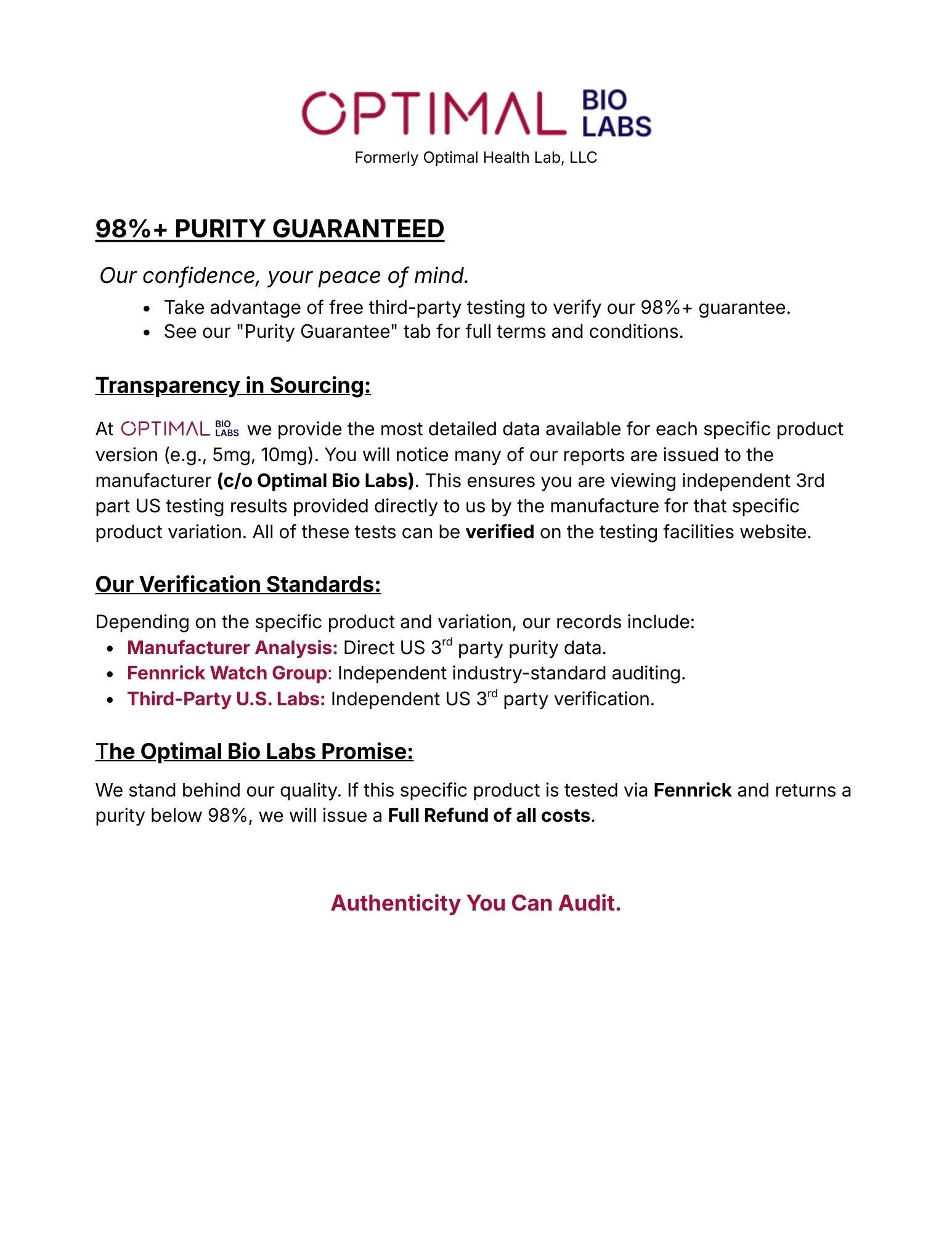
Purity: ≥ 99% USA Tested, Verified Purity (HPLC Tested)
Verification: Verifiable COA’s (Batch-Matched)
Emerging Research Evidence:
In laboratory settings, these compounds are extensively investigated for their role in modulating biological markers associated with somatopause, with a specific focus on how it interacts with the mechanisms regulating lean tissue mass, bone mineral density, and metabolic rate in test subjects. Ongoing research suggests potential links between this compound and the optimization of sleep architecture, cognitive stability, and recovery pathways, while additional findings in controlled environments point to its influence on wound healing, collagen synthesis, and the systemic balance of inflammatory markers.
Keep product in cool, dark place.
Sold for Research Use Only / Not FDA Regulated
Batch-verified inventory. See Individual Products for 3rd Party COA’s
In stock
⚠️ Requires Sterile Water for Reconstitution
For laboratory use only.
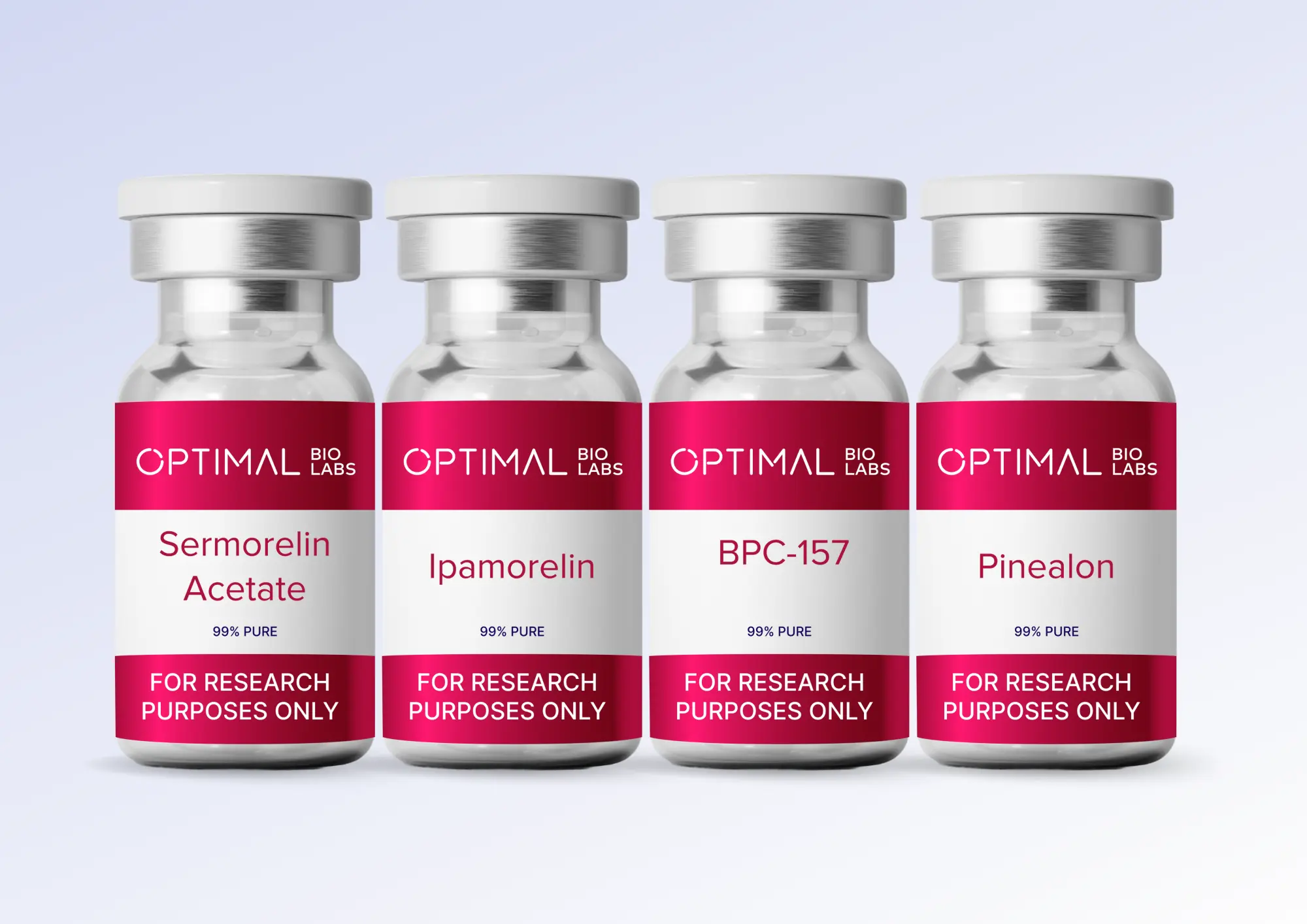
Women’s 50+ Vitality Research Collection Overview
Looking to explore healthy-aging markers in mid-life and beyond models—this Women’s 50+ Vitality Research Collection has it all. Explore how complementary peptides (Sermorelin + Ipamorelin + BPC-157 + Pinealon) can relate to age-associated physiological markers. It is designed to investigate markers associated with “somatopause”—the age-related decline in endogenous growth hormone (GH) output and IGF-1 levels. Research indicates that starting in mid-adulthood, GH pulse frequency and amplitude drop, which is commonly linked in literature to shifts such as adipose accumulation, reduced lean mass, lower bone turnover, dermal density changes, and altered sleep architecture. If your research goal is to explore sleep quality, energy and cognition, bone and collagen metrics, metabolic balance, inflammatory tone, and tissue repair within one protocol, this collection assembles all four analytes in a single kit.
Lean muscle support & metabolic markers – explore markers linked to strength, body composition, and substrate utilization.
Bone density markers & sleep architecture – investigate signals tied to bone turnover and deep, restorative sleep cycles.
Recovery kinetics after activity – look at soft-tissue repair and recovery indicators.
Cognitive clarity & mood stability – evaluate memory, focus, and emotional-balance measures.
Dermal density & collagen support – assess collagen and elastin production markers (firmness and resilience).
Inflammatory balance & immune tone – examine cytokine balance and general wellness indicators.
Daily energy signaling – study mitochondrial and hormone-related signals that correlate with vitality.
Why these four together?
Two doors to GH (Sermorelin + Ipamorelin): Using both can enable the study of broad, coordinated signaling to the pituitary (different receptors, same axis) often examined for sleep, muscle, fat metabolism, collagen, and bone health.
Repair + performance (BPC-157): Adds a tissue-healing and recovery layer that complements training and daily activity models—useful when midlife goals include staying active without long downtime.
Brain + body (Pinealon): Brings the cognitive inquiry piece to a bundle that already covers physique and recovery, rounding out daytime energy, focus, and mood support in research contexts.
This collection is curated to help investigators examine complementary pathways that literature associates with:
hGH/IGF-1 dynamics – study markers tied to sleep quality, bone turnover, collagen synthesis, metabolic rate, and lean-mass proxies (Sermorelin; Ipamorelin).
Cognitive clarity & mood regulation – evaluate neuroprotective and neuroplasticity-related signaling relevant to memory, focus, and emotional stability (Pinealon).
Recovery, wound-healing & tissue integrity – assess repair biomarkers, angiogenesis, and extracellular-matrix dynamics (BPC-157).
Body composition & metabolism – explore lipolysis, visceral-adipose endpoints, and resting metabolic rate signals frequently examined with GHRH/GHS combinations (Sermorelin; Ipamorelin).
Bone & connective tissue – investigate bone-turnover markers and collagen/elastin production that may support structural integrity (GH/IGF-1 axis; BPC-157).
Immune & inflammatory balance – examine cytokine profiles and stress-response pathways related to recovery, resilience, and midlife wellness (BPC-157; GH-axis).
Sleep architecture & energy – assess correlations between GH pulses, slow-wave sleep, and daytime vitality measures (Sermorelin; Ipamorelin).
Sermorelin Acetate
Investigated for upstream GH signaling support, often studied for sleep quality, lean muscle, fat metabolism, collagen, and bone turnover markers. Sermorelin is a synthetic peptide that triggers GH release by activating the GHRH receptor. Research commonly explores pituitary functions, GH/IGF-1 biology, and questions around aging, recovery, body composition, and sleep while leveraging the body’s own GH pulse patterns.
Ipamorelin
Ipamorelin is a selective agonist investigated for its ability to activate the ghrelin / growth-hormone secretagogue receptor (GHSR1a) and trigger growth-hormone (GH) release. It is designed for high selectivity with minimal observed impact on cortisol or ACTH. Research suggests this GH stimulation may be linked to various observed benefits, including muscle mass support, tissue repair, lipolysis, improved sleep, and and cellular maintenance pathways studied in age-associated models. Research is ongoing and findings are emerging.
BPC-157
Known as the “Body Protection Compound,” BPC-157 is a pentadecapeptide derived from human gastric juice. It has been demonstrated in animal studies to promote the healing of various tissues, including skin, muscle, bone, ligament, and tendon. However, the exact underlying mechanism is still being clarified. Research is ongoing and findings are emerging.
Pinealon
Pinealon is a three-amino-acid bioregulator. Peptide bioregulators are short peptides that enter cell nuclei to influence gene expression, investigated for potential effects on organ function and regeneration. Pinealon is researched for its potential to support brain health by protecting neurons, enhancing memory, regulating circadian rhythms, and promoting telomere health. Studies suggest it may influence neural pathways involved in memory formation and retrieval. In lab and animal models, Pinealon has shown signals indicating reduced cellular damage and improved survival. This is early-stage research—human evidence is limited. Research is ongoing and findings are emerging.
Research-only note: These compounds are not FDA-approved for therapeutic use; published effects are primarily preclinical and exploratory.
For Research Use Only — Not for Human or Veterinary Use. Not evaluated or approved by the FDA. Not intended to diagnose, treat, cure, or prevent any disease. All information on this website is provided strictly for laboratory research and educational purposes. Nothing herein constitutes medical, clinical, or legal advice, nor an endorsement of non-laboratory use. Any discussion of specific peptides or potential research findings is informational only and must not be interpreted as guidance for use in or on humans or animals.