
$298.00 Original price was: $298.00.$253.30Current price is: $253.30.Save $44.70
What’s Included? 6 Vials
Research Duration: ~4–6 weeks
Research Structure: Weekly GLP-1 CS with daily AOD-9604 and L-Carnitine within controlled models.
Research Note: Do not combine GLP-1 CS & AOD-9604 in the same solution due to pH incompatibility.
Form: GLP-1 CS & AOD-9604 Lyophilized Powder
Emerging Research Evidence:
This collection is researched for appetite signaling, fat metabolism, and body-composition pathways in controlled laboratory models.
Keep product in cool, dark place unmixed until needed. Once mixed keep refrigerated.
Sold for Research Use Only / Not FDA Regulated
Batch-verified inventory. See Individual Products for 3rd Party COA’s
In Stock — Order by 3 PM Central Time, ships today
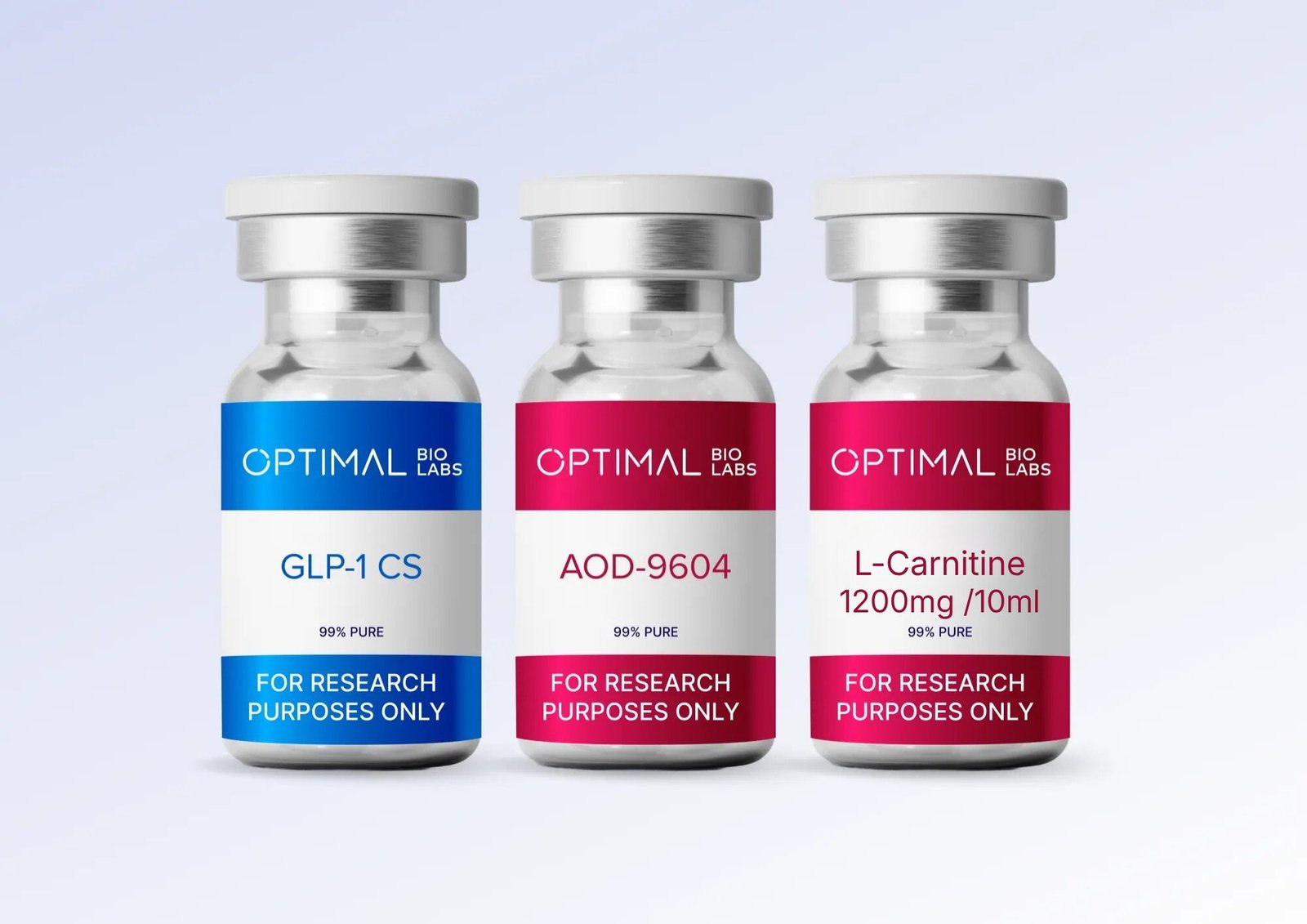
Are your research protocols focused on weight regulation and metabolic signaling pathways? Published literature has explored measurable changes in body-composition–related biomarkers, energy balance signaling, and metabolic activity within controlled laboratory settings. This curated collection brings together compounds commonly studied for appetite-related pathways, adipose signaling, nutrient utilization, and metabolic efficiency—streamlining multiple research areas into a single, structured collection.
Appetite & energy-intake signaling: GLP-1 CS (Cagrilintide + Semaglutide) combines a GLP-1 receptor agonist with an amylin analog, commonly studied for complementary pathways related to satiety signaling, energy intake regulation, and glycemic-associated biomarkers.
Targeted adipose & lipid metabolism: AOD-9604 is frequently investigated for its role in lipolysis signaling and adipocyte-related pathways, supporting research into fat metabolism and body-composition endpoints.
Nutrient utilization & metabolic efficiency: L-Carnitine is studied for its role in fatty-acid transport and mitochondrial energy pathways, often examined in relation to energy utilization, metabolic efficiency, and substrate processing.
Adipose metabolism & fat-related biomarkers — evaluate signaling pathways associated with lipolysis, adipocyte regulation, and fat-oxidation processes (AOD-9604; L-Carnitine).
Appetite signaling & energy intake — study GLP-1 and amylin receptor–mediated pathways involved in satiety signaling, gastric-emptying dynamics, and central regulation of energy intake (GLP-1 CS).
Glycemic regulation & metabolic markers — investigate biomarkers associated with glucose signaling, insulin response, and post-prandial metabolic dynamics (GLP-1 CS).
Nutrient utilization & energy metabolism — examine pathways involved in fatty-acid transport, mitochondrial activity, and energy production efficiency (L-Carnitine).
Body-composition–associated signaling — explore how metabolic pathways influence markers tied to tissue composition, substrate allocation, and structural balance within experimental models.
Metabolic balance & adaptive signaling — observe interactions between energy intake, utilization, and regulatory pathways across controlled research conditions.
Investigated for its role in satiety-related signaling pathways and glucose-associated biomarkers in controlled research models. Cagrilintide is an amylin analog, while semaglutide is a GLP-1 receptor agonist. Together, they are commonly studied for their combined influence on appetite-related pathways, energy intake signaling, and metabolic regulation markers. Ongoing research explores how this dual-pathway approach interacts with broader metabolic and cardiometabolic signaling within controlled environments.
AOD-9604 is a modified fragment derived from the C-terminal region (176–191) of human growth hormone, studied for its role in lipid-metabolism signaling pathways. Research commonly investigates its involvement in lipolysis signaling, adipocyte regulation, and fat-oxidation–related biomarkers. Additional areas of study include its selectivity within adipose-related pathways and its interaction with metabolic signaling processes in controlled laboratory models.
L-Carnitine is a naturally occurring compound studied for its role in fatty-acid transport and mitochondrial energy metabolism. In research settings, it is commonly examined for its involvement in nutrient utilization pathways, energy production efficiency, and metabolic signaling related to substrate processing. Ongoing investigations explore how L-Carnitine influences markers associated with energy balance, metabolic activity, and cellular energy dynamics.
These compounds are not FDA-approved for therapeutic use. Published findings are primarily preclinical and exploratory, and all materials are intended for research use only.
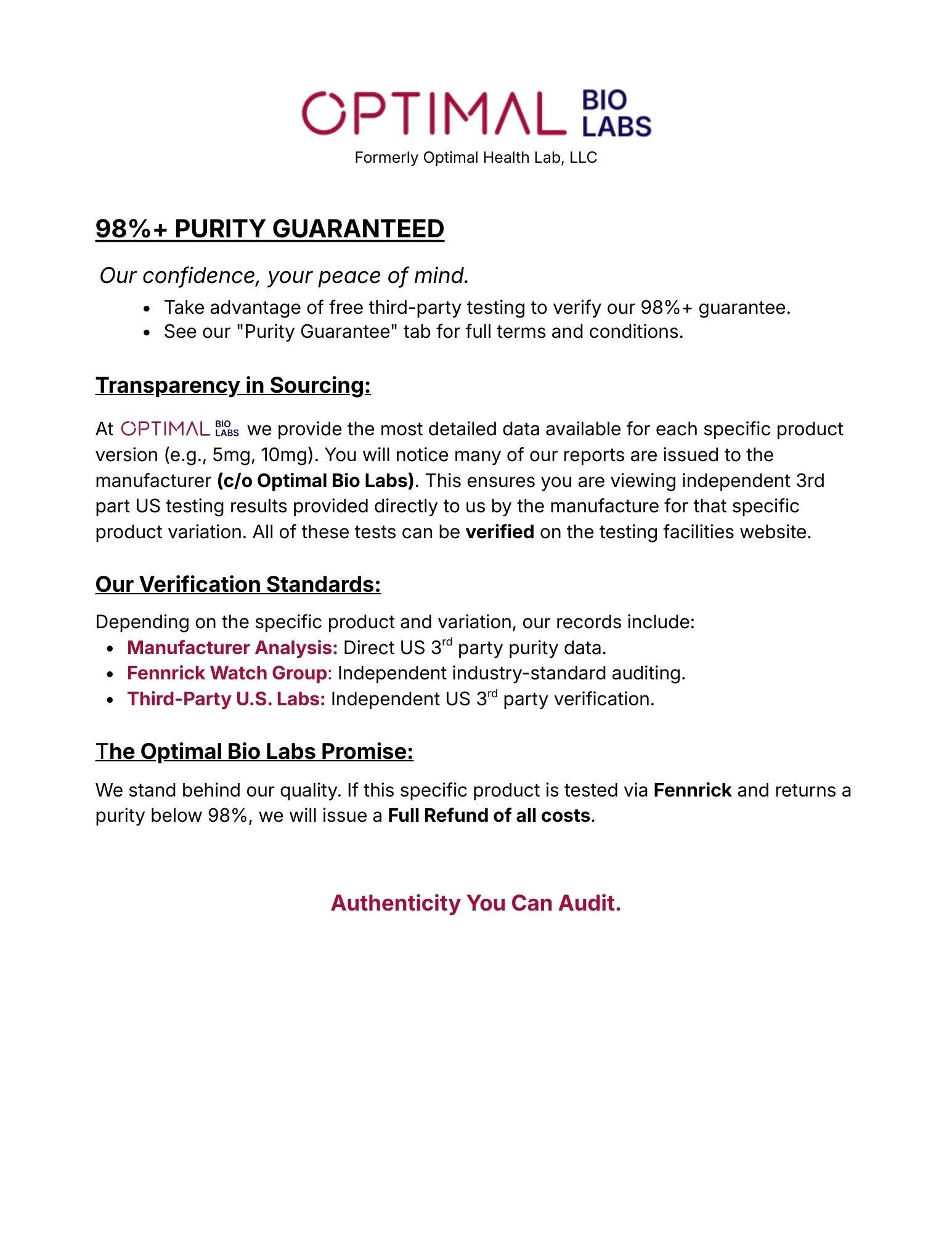
For Research Use Only — Not for Human or Veterinary Use. Not evaluated or approved by the FDA. Not intended to diagnose, treat, cure, or prevent any disease. All information on this website is provided strictly for laboratory research and educational purposes. Nothing herein constitutes medical, clinical, or legal advice, nor an endorsement of non-laboratory use. Any discussion of specific peptides or potential research findings is informational only and must not be interpreted as guidance for use in or on humans or animals.
Website information, calculators, guides, and educational resources are provided for general informational purposes only. They are not intended for human or veterinary use, medical advice, dosing, administration, treatment, or promised outcomes.
Tengo 21 años o más y entiendo que este sitio, sus productos y recursos son solo para fines de investigación e información, no para uso humano o veterinario ni como asesoramiento médico.