
$319.00 Original price was: $319.00.$287.00Current price is: $287.00.Save $32.00
What’s Included: 5 Vials
Research Note: NAD+ should not be mixed in the same solution with other compound due to pH incompatibility.
Form: Lyophilized Powder
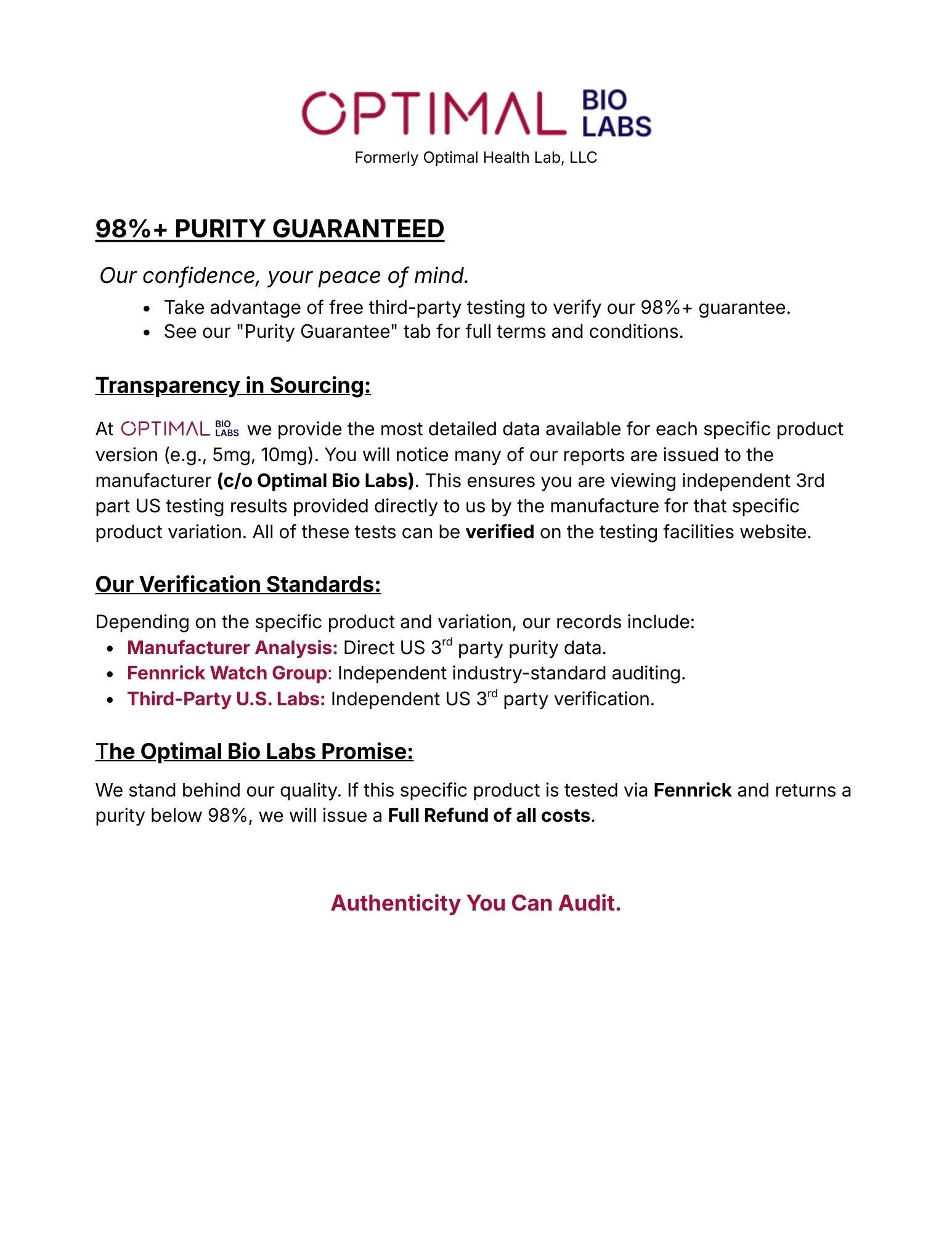
Purity: ≥ 99% USA Tested, Verified Purity (HPLC Tested)
Verification: Verifiable COA’s (Batch-Matched)
Emerging Research Evidence:
This research collection supports the study of biological markers related to systemic regulation and homeostatic maintenance in age-associated laboratory models. The compound combination is used to examine coordinated signaling involved in tissue structure, repair dynamics, inflammatory modulation, and cellular integrity. By enabling integrated evaluation of sleep-related signaling, metabolic balance, and cellular maintenance pathways within a single experimental framework, this multi-analyte collection facilitates structured investigation in controlled research environments.
Keep product in cool, dark place.
Sold for Research Use Only / Not FDA Regulated
Batch-verified inventory. See Individual Products for 3rd Party COA’s
In stock
⚠️ Requires Sterile Water for Reconstitution
For laboratory use only.
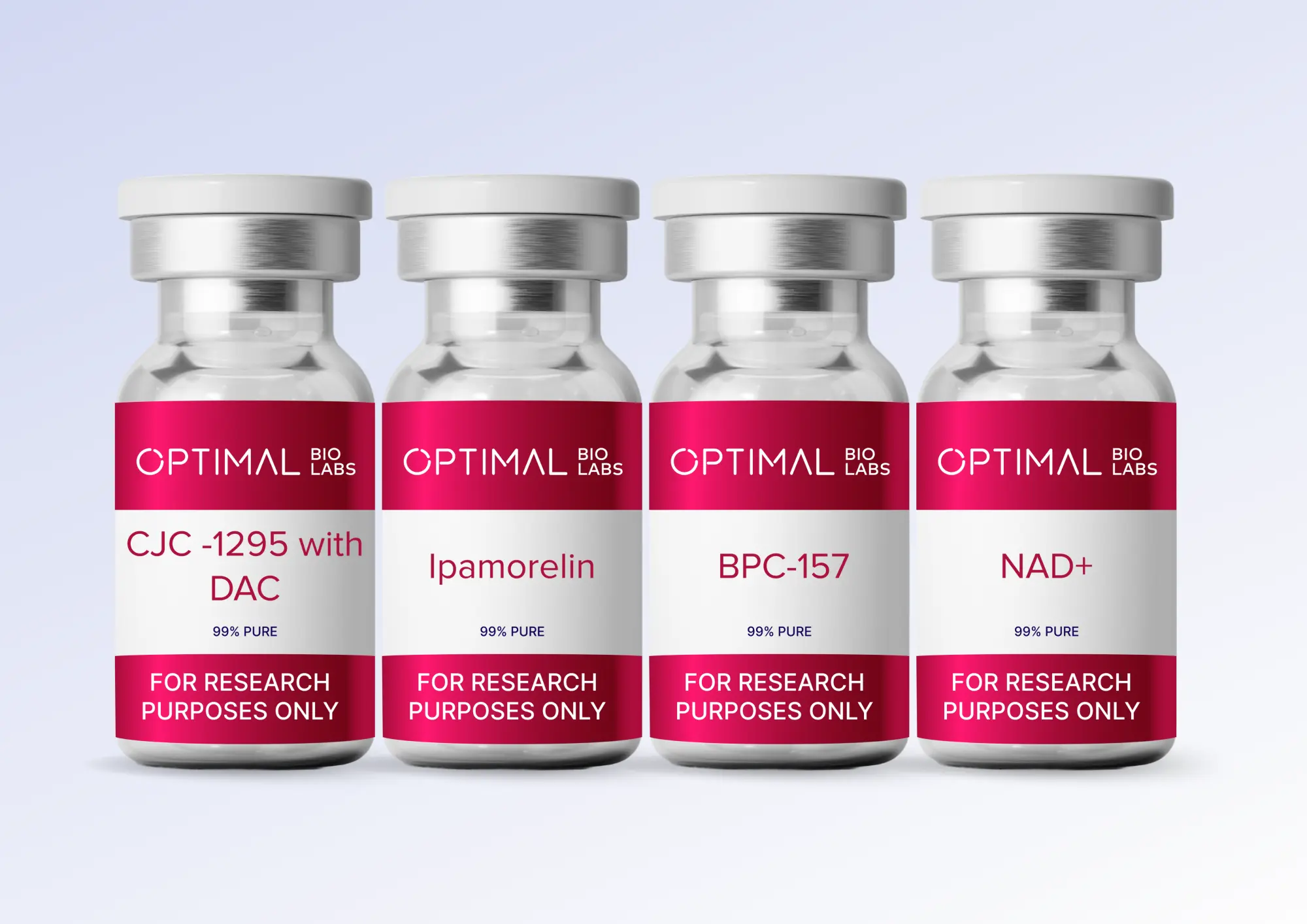
Men’s 50+ Vitality Research Collection Overview
This research collection is formulated for investigators studying biological markers associated with systemic regulation, tissue integrity, and metabolic balance in age-associated experimental models. The powdered compound combination is utilized in laboratory settings to examine coordinated signaling related to lean-tissue structure, recovery kinetics, inflammatory balance, and cellular maintenance.
Scientific interest in this protocol centers on its application in evaluating sleep-associated signaling, metabolic regulation, and structural-integrity markers within a unified research framework. By assembling four distinct analytes, the collection facilitates efficient investigation of how integrated signaling pathways interact in controlled experimental systems.
Why these four together?
Coordinated pituitary signaling: CJC-1295 (GHRH analog) plus Ipamorelin (ghrelin-receptor agonist) enable study of dual-pathway GH stimulation associated with strength, body composition, and sleep-quality endpoints.
Targeted repair support: BPC-157 adds a focused line of inquiry around soft-tissue recovery and structural integrity—useful for midlife training and daily resilience models.
Cellular backbone: NAD+ provides a cofactor framework to examine energy metabolism, oxidative-stress responses, and DNA-maintenance activity that may underpin cellular resilience and metabolic regulation in age-associated research models.
This collection is curated to help investigators examine complementary pathways that literature associates with:
Lean muscle & strength – evaluate IGF-1–linked signaling and myofibrillar protein-synthesis biomarkers (CJC-1295; Ipamorelin).
Recovery & tissue repair – study soft-tissue healing, angiogenesis, and collagen-matrix dynamics relevant to exercise and overuse models (BPC-157).
Sleep architecture – investigate GH-pulse dynamics and slow-wave sleep correlations frequently examined with GHRH/GHS research (CJC-1295; Ipamorelin).
Body composition & fat metabolism – assess lipolysis, visceral-adipose endpoints, and metabolic-rate proxies.
Bone & connective tissue – explore markers of bone turnover, collagen production, and structural integrity (GH/IGF-1 axis; BPC-157).
Inflammatory & immune balance – examine cytokine profiles tied to resilience and post-exercise recovery.
Cellular energy & DNA maintenance — assess how NAD+ supports mitochondrial function, sirtuin/PARP activity, and genomic stability in age-associated experimental systems.
CJC-1295 with DAC is investigated for its capacity to provide a sustained increase in endogenous growth hormone (GH) and insulin-like growth factor 1 (IGF-1) signaling. The integration of the Drug Affinity Complex (DAC) allows for extended activity in research settings, enabling the study of long-term effects on muscle remodeling, lipolysis, and cellular recovery markers. Scientists utilize this peptide to evaluate the biological pathways associated with sleep architecture and metabolic energy regulation over a multi-day observation period. Research is ongoing to determine how this prolonged secretagogue activity influences systemic aging markers and neurocognitive function in experimental models.
Ipamorelin is a selective ghrelin receptor agonist investigated for its ability to trigger pulsatile growth hormone release via the growth hormone secretagogue receptor (GHSR1a). In laboratory studies, it is utilized to examine the stimulation of lean muscle mass, tissue repair kinetics, and bone mineral density without significant observed impact on cortisol or ACTH levels. Researchers focus on its high selectivity to understand the mechanisms of collagen production, lipid metabolism, and the maintenance of cognitive clarity markers within strictly controlled environments. Ongoing studies continue to explore its role in sleep quality and the mitigation of age-related physiological decline.
BPC-157 is a research pentadecapeptide derived from gastric protein signaling, investigated for its role in promoting the healing kinetics of skin, muscle, bone, and ligament tissues. Known in technical literature for its “Body Protection Compound” characteristics, it is studied for its ability to modulate angiogenic pathways and inflammation within damaged connective tissues. Research focuses on how this peptide influences the rate of soft-tissue recovery and the restoration of gut mucosal integrity in various animal models. Current scientific efforts are directed at clarifying the exact molecular mechanisms that drive its potential for multi-tissue repair and systemic inflammatory balance.
NAD+ is an essential coenzyme investigated for its critical role in cellular energy production, DNA repair mechanisms, and the regulation of metabolic redox reactions. Research examines how this molecule facilitates the generation of ATP and acts as a key substrate for sirtuins and other enzymes involved in cellular signaling and genomic stability. Scientists investigate whether the restoration of NAD+ levels—which naturally decline in aging models—can influence the mitigation of age-related pathology and support cellular resilience markers. Current studies focus on its potential to regulate metabolic homeostasis and enhance the biological pathways associated with healthy aging and DNA maintenance.
Research-only note: These compounds are not FDA-approved for therapeutic use; published effects are primarily preclinical and exploratory.
For Research Use Only — Not for Human or Veterinary Use. Not evaluated or approved by the FDA. Not intended to diagnose, treat, cure, or prevent any disease. All information on this website is provided strictly for laboratory research and educational purposes. Nothing herein constitutes medical, clinical, or legal advice, nor an endorsement of non-laboratory use. Any discussion of specific peptides or potential research findings is informational only and must not be interpreted as guidance for use in or on humans or animals.