
$209.00 Original price was: $209.00.$189.00Current price is: $189.00.Save $20.00
What’s Included: 4 Vials
Research Note: Due to pH sensitivity, Tesamorelin is commonly handled separately in laboratory preparation workflows.
Form: Lyophilized Powder
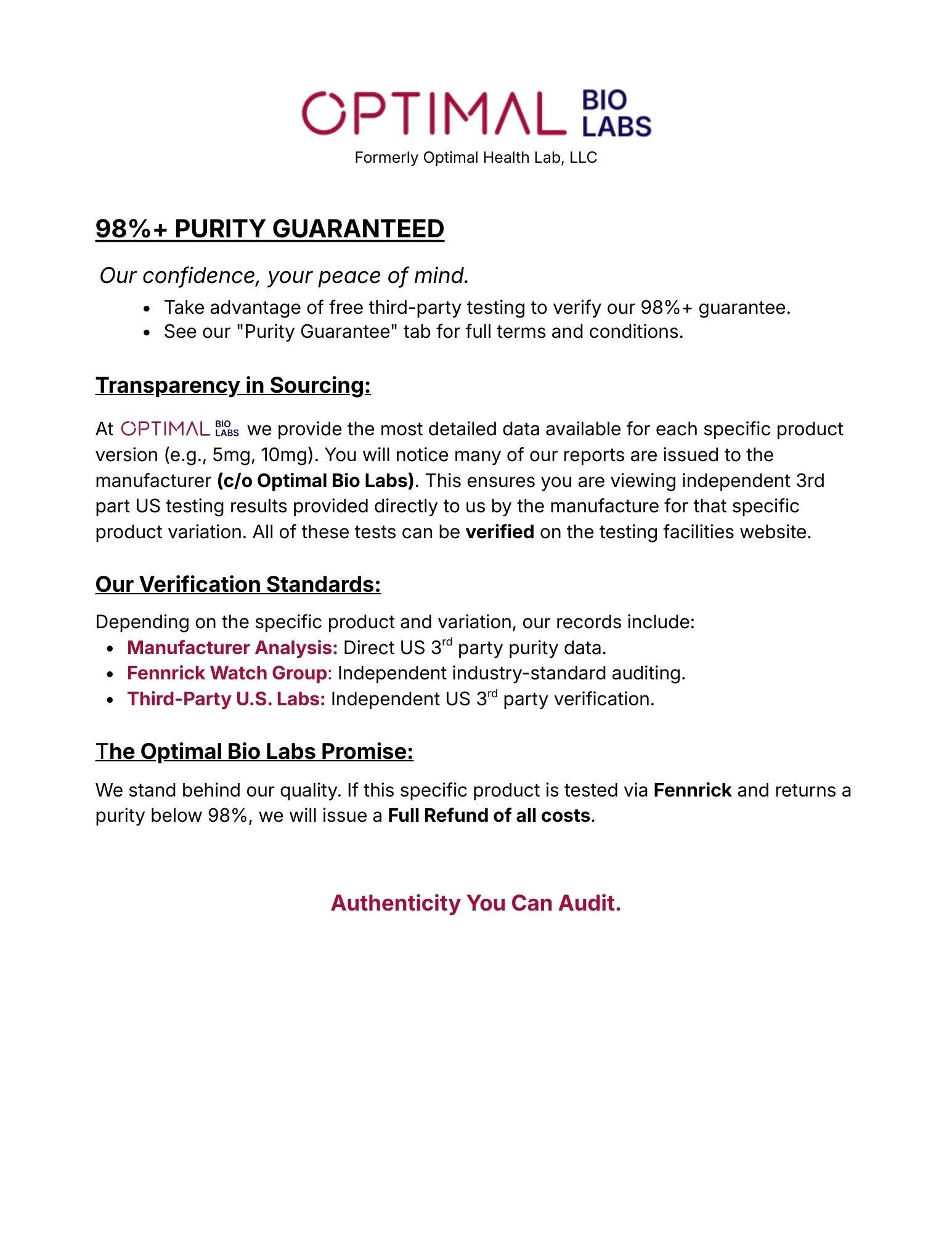
Purity: ≥ 99% USA Tested, Verified Purity (HPLC Tested)
Verification: Verifiable COA’s (Batch-Matched)
Emerging Research Evidence:
This three-analyte collectiom is utilized to investigate the biological markers of lean mass maintenance, bone density, and visceral lipid metabolism. Researchers investigate how combined peptide signaling pathways interact in controlled laboratory models, with attention to tissue-level biomarkers and inflammatory signaling. The protocol facilitates an integrated approach to studying structural integrity and metabolic homeostasis within a single research setting.
Batch-verified inventory. See Individual Products for 3rd Party COA’s
In stock
⚠️ Requires Sterile Water for Reconstitution
For laboratory use only.
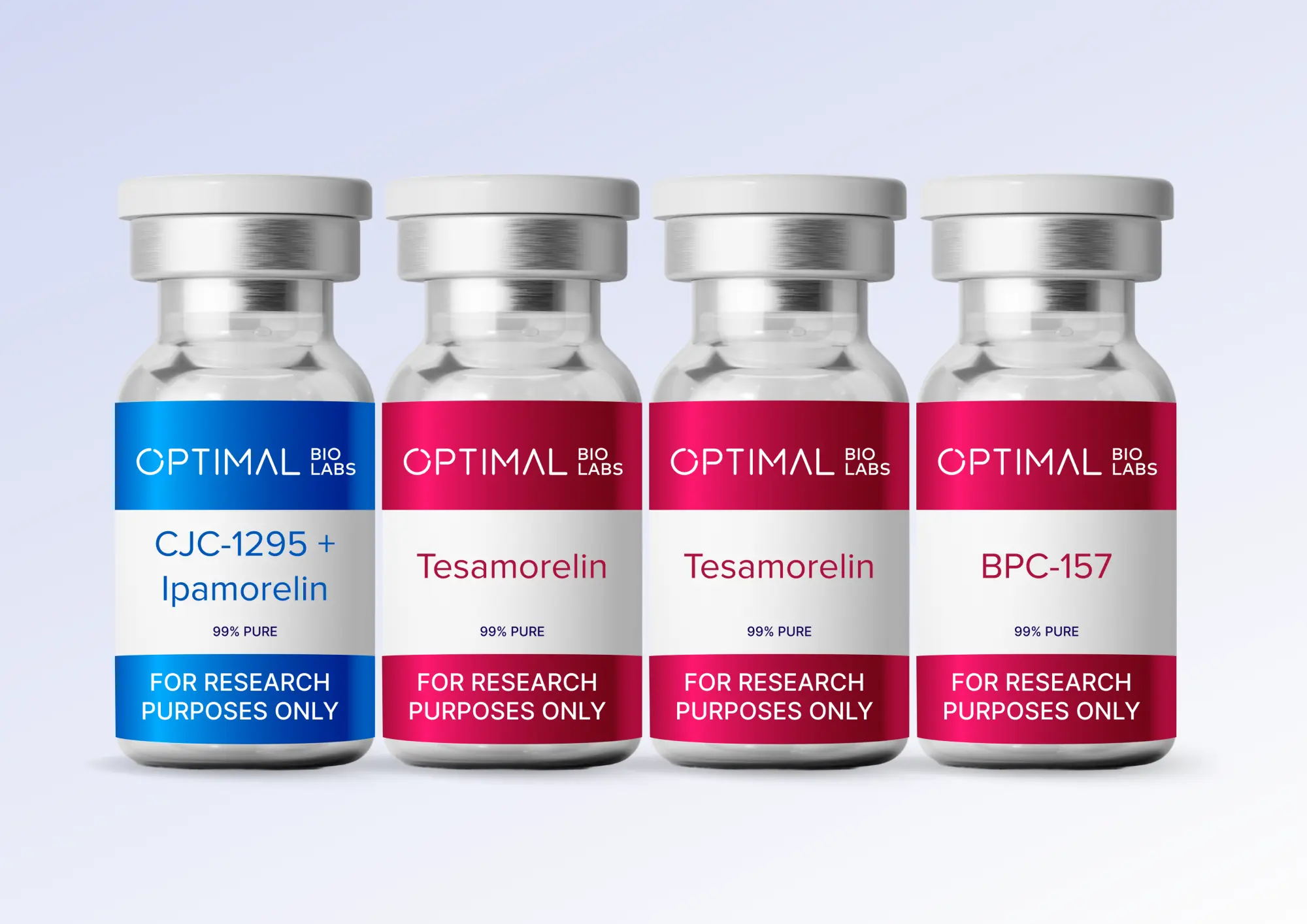
Anabolic Signaling & Performance Research Collection Overview
This research collection is specifically designed for investigators focusing on the simultaneous study of musculoskeletal remodeling, lipid metabolism, and the biochemical markers of systemic recovery. The three-analyte bundle allows for the precise evaluation of physiological proxies for lean tissue mass and skeletal density within controlled laboratory models. Scientific interest in this protocol centers on the modulation of inflammatory pathways and the potential for accelerated tissue repair kinetics across diverse experimental subjects. By integrating these specific compounds into a single collection, laboratories can more effectively examine the reduction of visceral adipose tissue markers and the optimization of metabolic homeostasis in a unified, high-purity research environment.
Why these three together?
This collection is curated to help investigators examine complementary pathways that literature associates with:
CJC-1295 with Ipamorelin is a synergistic research combination investigated for its dual-action modulation of endogenous growth hormone production. In laboratory settings, CJC-1295 is studied for its ability to provide sustained secretagogue activity, while Ipamorelin acts as a selective agonist to trigger specific, pulsatile growth hormone release through the ghrelin receptor. Researchers utilize this protocol to observe the biological markers of tissue regeneration, lipid metabolism, and the biomarkers associated with lean tissue mass. This combination allows for the evaluation of sleep architecture and immune system signaling markers while mimicking natural physiological pulse patterns within controlled experimental models.
Tesamorelin is a stabilized analogue of growth hormone-releasing hormone (GHRH) primarily investigated for its capacity to stimulate endogenous growth hormone secretion and subsequent IGF-1 elevation. Scientific research focuses on its specific influence over the reduction of visceral adipose tissue markers and the optimization of metabolic profiles in subjects with lipid distribution irregularities. Beyond its role in examining abdominal fat metabolism, Tesamorelin is utilized to study cardiovascular health markers, cognitive function stability, and the lean tissue–associated biomarkers. Ongoing investigations aim to clarify how this peptide’s potent GHRH activity modulates long-term metabolic homeostasis and systemic inflammatory balance.
BPC-157 is a research-grade pentadecapeptide derived from gastric protein signaling, technically known as “Body Protection Compound” for its role in multi-tissue repair kinetics. In animal models, researchers observe its ability to modulate signaling pathways associated with angiogenesis, collagen organization, and tissue-level repair markers in preclinical models by potentially modulating angiogenic pathways and nitric oxide signaling. The compound is investigated for its influence on systemic inflammatory markers and its capacity to restore homeostatic balance within damaged connective tissues. While current studies demonstrate significant regenerative signals, researchers continue to explore the exact molecular mechanisms that drive its potential for wound healing and overall physiological resilience.
Research-only note: These compounds are not FDA-approved for therapeutic use; published effects are primarily preclinical and exploratory.
For Research Use Only — Not for Human or Veterinary Use. Not evaluated or approved by the FDA. Not intended to diagnose, treat, cure, or prevent any disease. All information on this website is provided strictly for laboratory research and educational purposes. Nothing herein constitutes medical, clinical, or legal advice, nor an endorsement of non-laboratory use. Any discussion of specific peptides or potential research findings is informational only and must not be interpreted as guidance for use in or on humans or animals.