
$267.00 El precio original era: $267.00.$239.00El precio actual es: $239.00.Ahorra $28.00
What’s Included? 4 Vials
Nota de investigación: Do not combine GLP-1 CS & AOD-9604 in the same solution due to pH incompatibility.
Formato: Polvo liofilizado
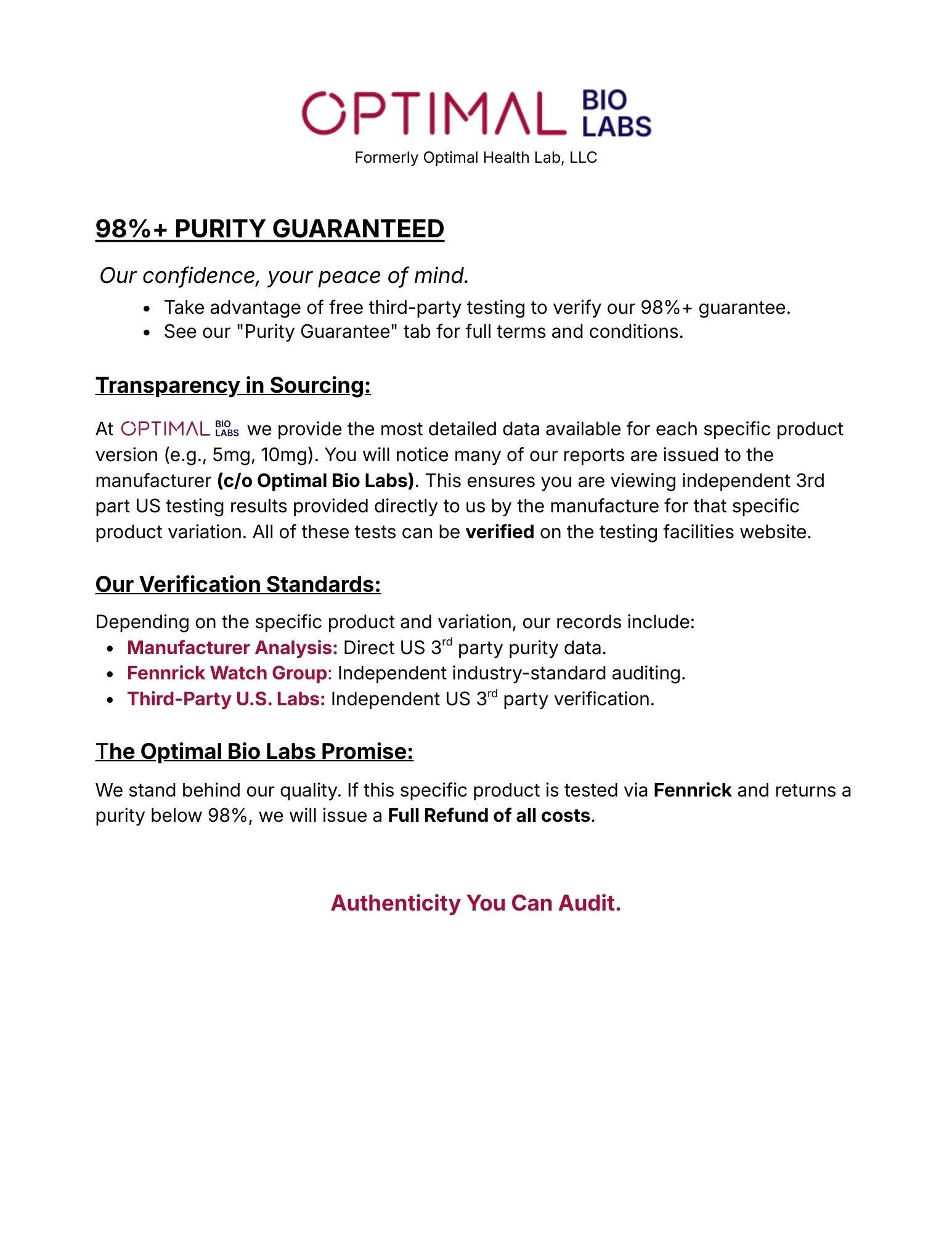
Pureza: ≥ 99% Probado en EE. UU., Pureza Verificada (Probada mediante HPLC)
Verificación: Certificados de Autenticidad Verificables ((Emparejados por Lote)
Nuevas evidencias de investigación:
Research on lipid breakdown, glucose management, and lean mass preservation markers in laboratory models. In controlled experimental environments, research models have demonstrated significant metabolic modulation regarding body mass markers while investigating potential influence over appetite signaling and systemic inflammatory balance. Laboratory studies further evaluate these compounds for their role in blood glucose management, the breakdown of stored lipid tissues, and the inhibition of adipocyte production markers.
Mantener el producto en un lugar fresco y oscuro.
Solo para Uso en Investigación / No Regulado por la FDA
Inventario Verificado por Lotes.. Consulte los productos individuales para obtener más información.rd Certificados de acción de partido
En stock
⚠️ Requiere agua estéril para su reconstitución.
Solo para uso en laboratorio.
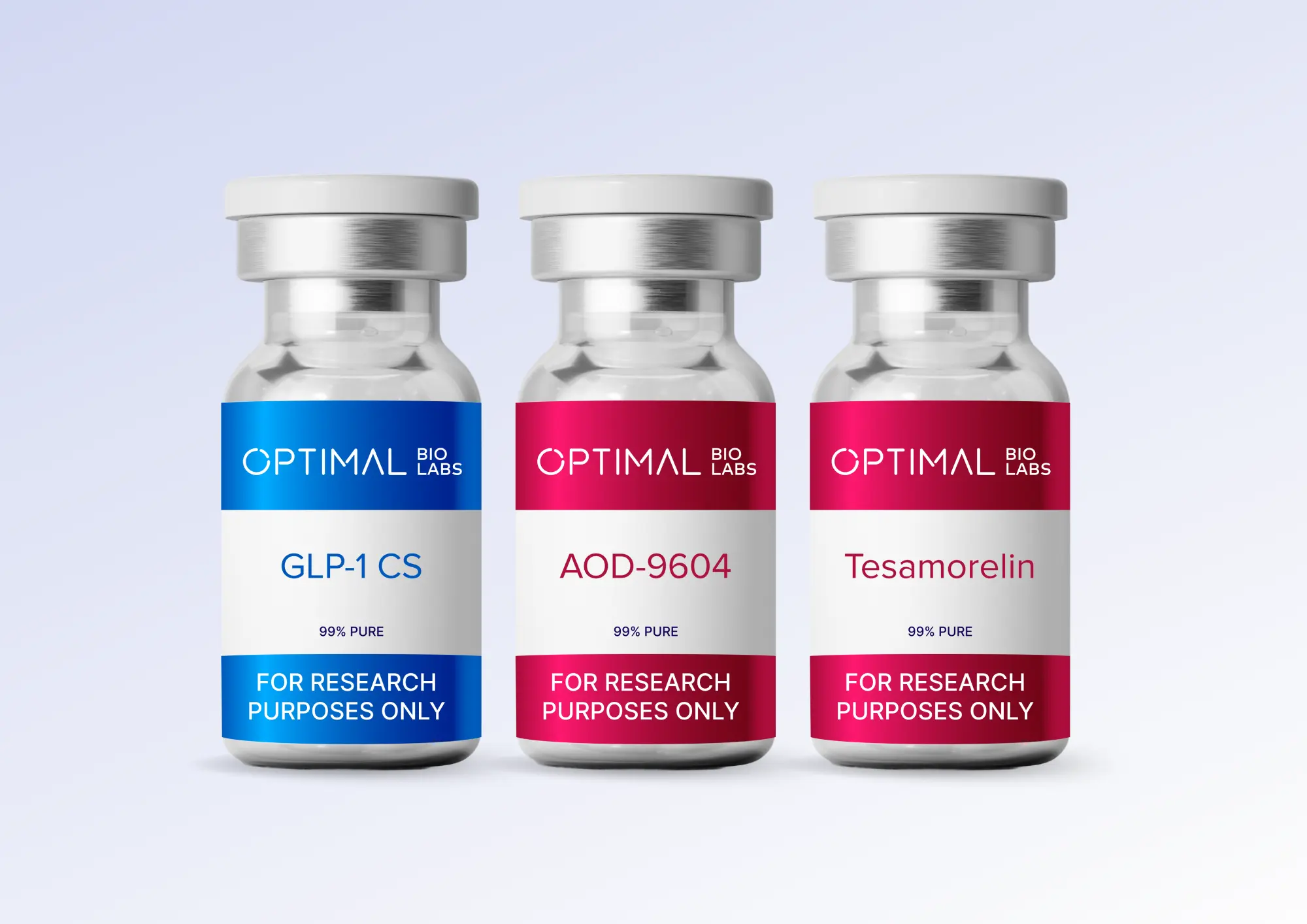
Weight Management Research Collection Overview
Are your research protocols focused on advanced weight management mechanisms? Published literature has explored notable changes in body-mass and metabolic markers within controlled research settings. This curated quad brings together compounds commonly studied for examining adipose-tissue signaling, visceral-fat–associated biomarkers, appetite-related regulatory pathways, managing glucose, enhancing performance, lean mass preservation, tissue repair, lipolysis, and supporting inflammatory balance—streamlining your protocol into a single, ready-to-use collection.
¿Por qué estos tres juntos?
Dual-hormone satiety approach: GLP-1 CS (also known as CagriSema) pairs a GLP-1 receptor agonist with an amylin analog to study complementary mechanisms for appetite regulation, reduced energy intake, and glycemic markers.
Targeted fat-metabolism signal: AOD-9604 is frequently investigated for its role in stimulating lipolysis and limiting new fat cell formation—useful for body-composition endpoints.
Endogenous GH-axis support: Tesamorelin is a GHRH analog used to examine pathways involved in natural growth-hormone and IGF-1 signaling, often linked in literature to lean-mass maintenance, visceral-fat metabolism, and metabolic balance.
This collevtion is curated to help investigators examine complementary pathways that literature associates with:
Adipose metabolism & fat mass – evaluate biomarkers of lipolysis and inhibited lipogenesis (AOD-9604), adipocyte differentiation, fat oxidation, and GH-linked changes in visceral-fat turnover (Tesamorelin).
Appetite control & energy intake – study GLP-1 receptor and amylin-receptor–mediated satiety signaling, gastric emptying, and hypothalamic pathways (CagriSema).
Glycemic regulation – investigate insulin secretion/sensitivity markers, post-prandial glucose dynamics, and fasting glucose endpoints relevant to GLP-1 research (CagriSema).
Lean-mass maintenance & tissue support – examine endogenous GH/IGF-1–related signaling, protein synthesis, cellular repair, and muscle-preservation markers (Tesamorelin).
Metabolic balance & endocrine rhythm – explore nighttime GH-pulse patterns, circadian influences on metabolic activity, and downstream endocrine markers involved in overall homeostasis (Tesamorelin).
Inflammatory balance – explore cytokine profiles and oxidative-stress markers associated with improved metabolic health.
Cellular stress-response markers — examine mitochondrial resilience and adaptive signaling pathways often discussed in age-associated research models.
GLP-1 CS / CagriSema (Cagrilintide + Semaglutide)
Investigated for its role in satiety-related signaling pathways and glucose-regulation biomarkers in controlled research models. Cagrilintide is an amylin analog (satiety hormone); semaglutide is a GLP-1 receptor agonist. Together they are being studied for potential applications in chronic weight management and type 2 diabetes research. Later-stage studies have examined this combination for its effects on metabolic and cardiometabolic markers within controlled trial environments.
AOD-9604
Studied for potential to reduce adipogenesis, stimulate lipolysis, and support bone & cartilage regeneration. Compound AOD-9604 is a modified form of amino acids naturally found in the body. It is a short chain of amino acids derived from the C-terminal region (residues 176–191) of human growth hormone (hGH) with an N-terminal tyrosine modification. AOD-9604 is researched for its potential to support lipid-metabolism signaling and adipocyte-regulation pathways by stimulating lipolysis (fat breakdown) and inhibiting lipogenesis (fat production), with studies focusing on its selectivity for obese fat cells over lean cells. It is also investigated for bone-stimulating properties, suggesting a possible role in osteoporosis prevention research.
Tesamorelin
Investigated for reduction of visceral adipose tissue, lean muscle support, cardiovascular health, cognitive function & immunity. Tesamorelin is a stabilized growth-hormone–releasing hormone (GHRH) that stimulates endogenous GH to raise IGF-1 levels. It is FDA-approved for the reduction of excess abdominal (visceral) fat in specific clinical populations (HIV-associated lipodystrophy). Its capacity to reduce visceral fat and improve metabolic profiles has led to broader investigational research exploring additional metabolic and signaling pathways. Research is ongoing and findings are emerging.
Nota solo para fines de investigación: Estos compuestos son no está aprobado por la FDA para uso terapéutico; los efectos publicados son principalmente preclínicos y exploratorios.
Solo para fines de investigación — No apto para uso humano ni veterinario. No evaluado ni aprobado por la FDA. No está destinado a diagnosticar, tratar, curar ni prevenir ninguna enfermedad. Toda la información de este sitio web se proporciona exclusivamente con fines educativos y de investigación de laboratorio. Nada de lo aquí expuesto constituye asesoramiento médico, clínico o legal, ni un respaldo para su uso fuera del laboratorio. Cualquier mención de péptidos específicos o posibles hallazgos de investigación tiene únicamente fines informativos y no debe interpretarse como una guía para su uso en humanos o animales.