
$227.00 El precio original era: $227.00.$204.00El precio actual es: $204.00.
What’s Included: 4 Vials
Research Note: PEG-MGF should not be mixed in the same solution with other compounds due to pH incompatibility.
Formato: Polvo liofilizado
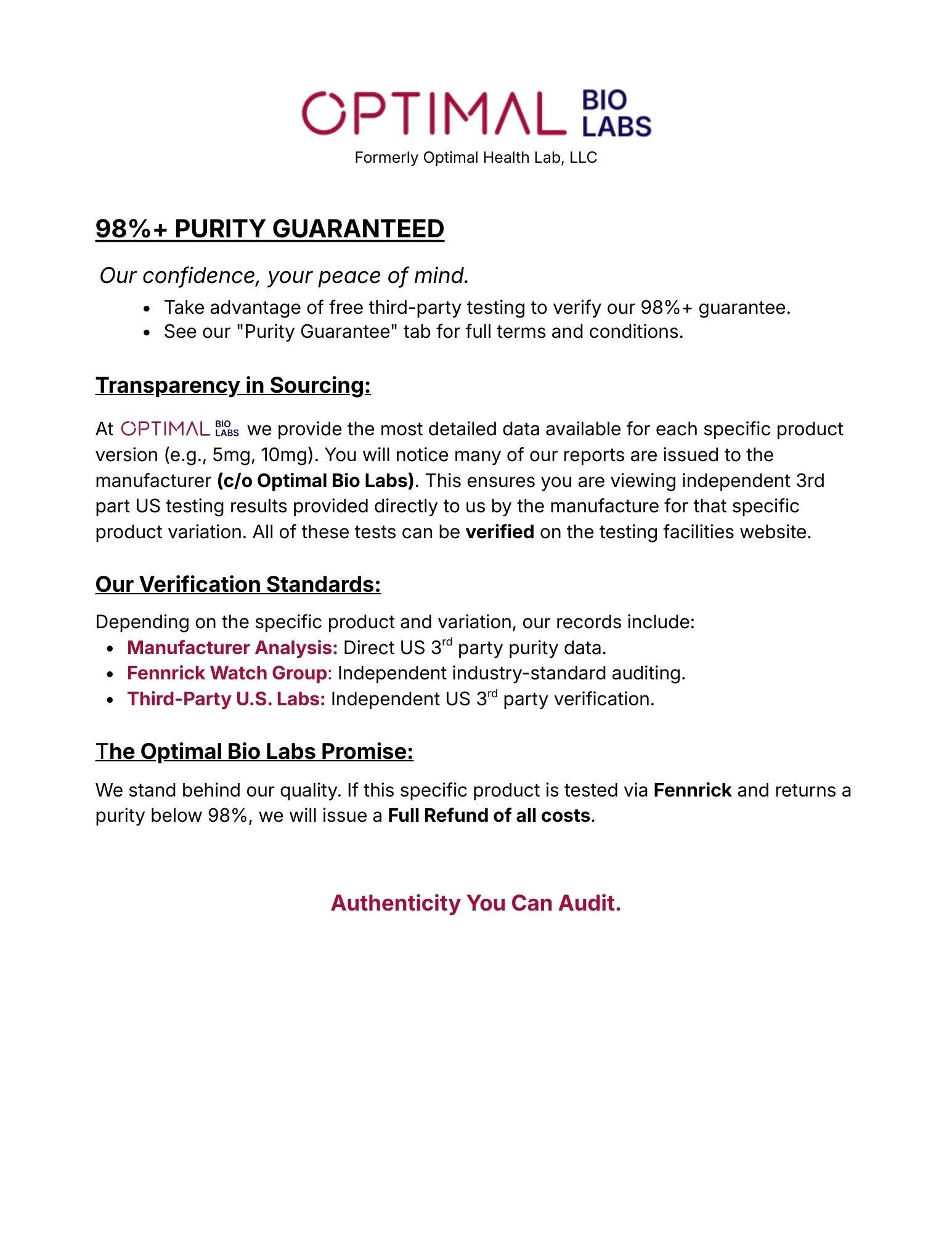
Pureza: ≥ 99% Probado en EE. UU., Pureza Verificada (Probada mediante HPLC)
Verificación: Certificados de Autenticidad Verificables ((Emparejados por Lote)
Nuevas evidencias de investigación:
This research-grade collection supports investigation into soft-tissue repair kinetics, joint mobility markers, and inflammatory signaling pathways within controlled laboratory models.
Mantener el producto en un lugar fresco y oscuro.
Solo para Uso en Investigación / No Regulado por la FDA
Inventario Verificado por Lotes.. See Individual Products for 3rd Party COA’s
En stock
⚠️ Requiere agua estéril para su reconstitución.
Solo para uso en laboratorio.
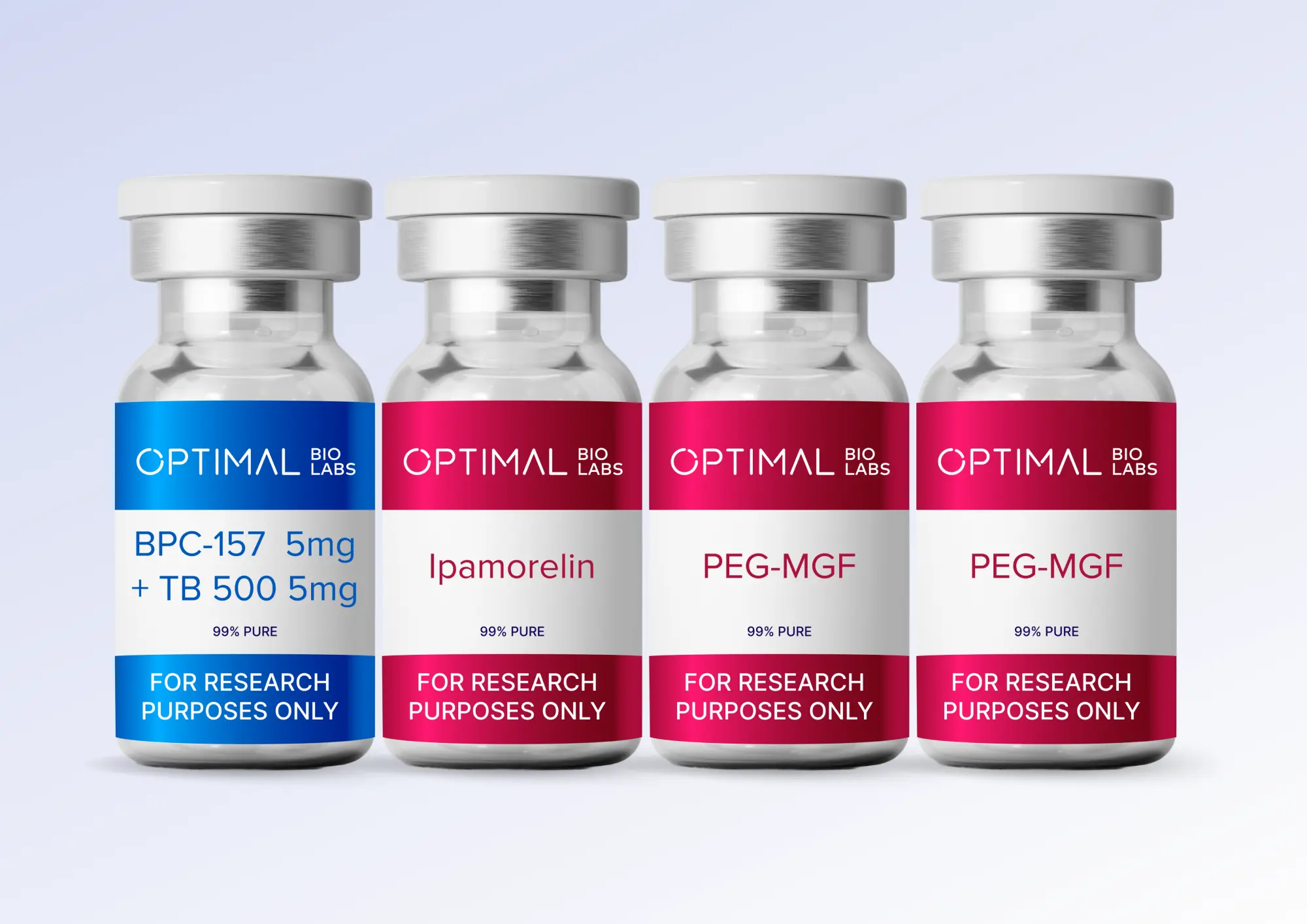
Tissue Repair & Recovery Research Collection Overview
This research-grade collection is formulated to facilitate the in-depth study of soft-tissue repair kinetics, joint mobility markers, and the molecular modulation of inflammatory pathways. It provides a robust platform for investigating the biochemical mechanisms of muscle remodeling and the regulation of the GH/IGF-1 signaling axis within controlled laboratory environments. Simultaneously, these compounds allow researchers to address physiological markers related to sleep architecture, dermal collagen density, and skeletal strength, alongside the evaluation of neurocognitive performance models. As a unified, high-purity collection, it serves as an essential tool for laboratories dedicated to understanding multi-system recovery processes and integrated regenerative signaling through comprehensive experimental protocols.
Why these together?
“Synergy: By combining the regenerative capabilities of BPC-157 and TB-500 with Ipamorelin’s GH-axis support and PEG-MGF’s remodeling potential, this bundle offers a multi-faceted approach to recovery research. The synergistic effect provides broad coverage for studies targeting soft-tissue repair, enhanced mobility, and long-term structural integrity in controlled research models.”
This bundle is curated to help investigators examine complementary pathways that literature associates with:
BPC-157 5mg + TB 500 5mg
Research suggests potential to accelerate tendon, ligament, & muscle recovery, reduce inflammation markers, and support flexibility and mobility.
BPC-157 and TB-500 are peptides investigated for their synergistic potential in promoting healing mechanisms by accelerating tissue repair and modulating inflammation. BPC-157, derived from gastric juice, is primarily studied for localized healing of tendons, ligaments, and gut lining via growth factor stimulation. TB-500, a synthetic version of thymosin beta-4, is researched for systemic effects on cellular migration and actin support, which may further aid tissue repair processes. Research is ongoing and findings are emerging.
Ipamorelin
Studies indicate potential links to lean muscle support, accelerated recovery, improved sleep quality, collagen production, and bone health markers.
Ipamorelin is a selective agonist investigated for its ability to activate the ghrelin / growth-hormone secretagogue receptor (GHSR1a) and trigger growth-hormone (GH) release. It is designed for high selectivity with minimal observed impact on cortisol or ACTH in studies. Research suggests this GH stimulation may be linked to various observed benefits, including muscle mass support, tissue repair, lipolysis, and age-associated research models. Research is ongoing and findings are emerging.
PEG-MGF
Investigated for potential effects on muscle repair signaling, recovery kinetics, bone repair & inflammation reduction.
PEG-MGF is an isoform of Insulin-like Growth Factor-1 (IGF-1) that is naturally expressed in response to mechanical stress, activating muscle stem cells known as satellite cells. These cells are crucial for muscle fiber remodeling, and PEG-MGF is studied for its potential to accelerate this mechanism. Current studies focus on its role in muscle hypertrophy signaling and repair pathways. PEG-MGF is studied in laboratory models for its role in muscle remodeling and repair signaling. Research is ongoing and findings remain preliminary.
Nota solo para fines de investigación: These compounds are no está aprobado por la FDA para uso terapéutico; los efectos publicados son principalmente preclínicos y exploratorios.
Solo para fines de investigación — No apto para uso humano ni veterinario. No evaluado ni aprobado por la FDA. No está destinado a diagnosticar, tratar, curar ni prevenir ninguna enfermedad. Toda la información de este sitio web se proporciona exclusivamente con fines educativos y de investigación de laboratorio. Nada de lo aquí expuesto constituye asesoramiento médico, clínico o legal, ni un respaldo para su uso fuera del laboratorio. Cualquier mención de péptidos específicos o posibles hallazgos de investigación tiene únicamente fines informativos y no debe interpretarse como una guía para su uso en humanos o animales.