
Peptide Research Categories:
What Different Peptides Are Studied For
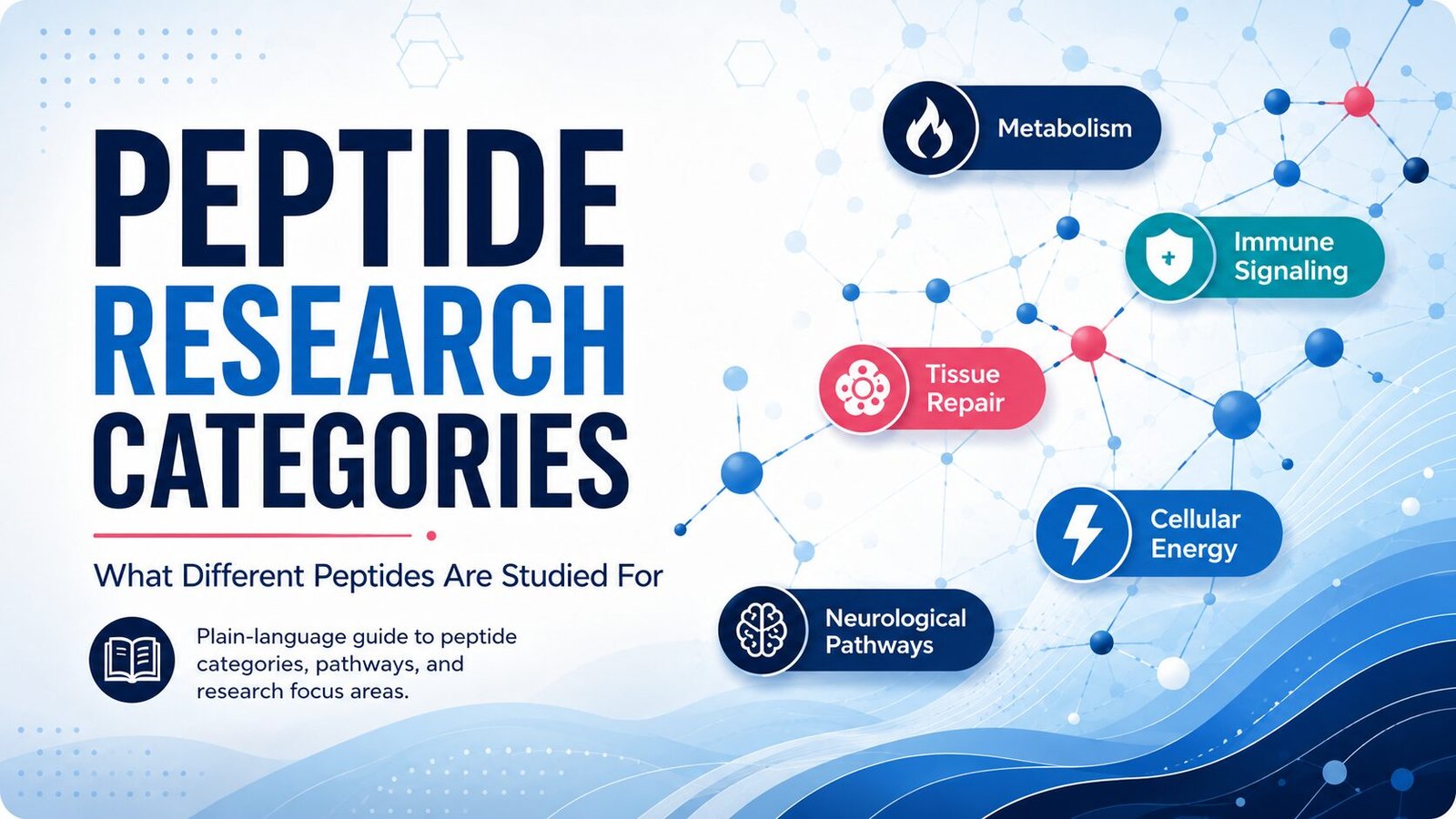
Peptides are short chains of amino acids that can carry signals between cells. Researchers study them to better understand how cells communicate and how different biological systems work.
Peptide research covers many areas, including metabolism, immune signaling, tissue structure, cellular energy, neurological communication, and hormone-related pathways. These are know as Peptide Research Categories.
This guide explains the main categories of peptide research in everyday language. It does not cover individual compounds, dosing, human use, or treatment recommendations.
Peptide research categories group peptides according to the biological processes or signaling pathways
being studied.
These categories are not always separate. A peptide studied in metabolic research, for example, may also
be involved in hormone signaling, inflammation, or cellular energy.
The categories below describe common areas of laboratory and scientific research.
What Are Peptide Research Categories?
01. Metabolic and Energy Research
What it means
Metabolism is the way cells process and use nutrients to produce energy.
What researchers study
Researchers may examine peptide signaling related to:
- Glucose and insulin pathways
- Appetite and energy-balance signals
- Fat and carbohydrate processing
- Nutrient-related cell communication
- Metabolic stress
- Energy use within cells
Why it is studied
This research helps scientists understand how cells recognize available nutrients and adjust their energy use.
Questions and limitations
Metabolism involves many connected systems. A change in one laboratory marker does not prove a health benefit or predict how an entire living system will respond.
Peptide Research Categories terms: metabolic peptide research, energy regulation, glucose signaling, insulin pathways and cellular metabolism.
02. Mitochondrial and Cellular-Energy Research
What it means
Mitochondria are structures inside cells that help turn nutrients into usable energy.
What researchers study
This research may examine:
- Mitochondrial activity
- Cellular energy production
- Oxidative stress
- Communication between mitochondria and cells
- Responses to low-energy conditions
- Maintenance of damaged cell components
Why it is studied
Scientists want to understand how cells maintain energy and respond when they are placed under stress.
Questions and limitations
A change in mitochondrial activity does not automatically mean increased energy, improved performance, slower aging, or a better health outcome.
Peptide Research Categories terms: mitochondrial peptide research, cellular energy, mitochondrial signaling, oxidative stress and metabolic function.
03. Tissue Structure and Repair Research
What it means
This category examines the biological steps that take place when cells and tissues respond to damage.
What researchers study
Researchers may investigate:
- Cell movement and migration
- Collagen organization
- Formation of new blood vessels
- Structural tissue signaling
- Inflammatory signals during repair
- Communication between different repair cells
Why it is studied
The goal is to better understand the signals involved in normal tissue maintenance and laboratory models of tissue repair.
Questions and limitations
Many findings in this area come from isolated cells or animal studies. These results may not produce the same response in people or other living systems.
Peptide Research Categories terms: tissue repair peptide research, cell migration, collagen research, wound-healing pathways and tissue regeneration studies.
04. Immune and Inflammation Research
What it means
The immune system uses signals to recognize stress, damage, and foreign materials. Inflammation is one part of that response.
What researchers study
Researchers may examine:
- Immune-cell communication
- Production of inflammatory signals
- How inflammation begins
- How inflammatory responses are controlled
- How immune signals return toward normal
- Interactions between immune cells and tissues
Why it is studied
Scientists study these pathways to better understand how immune responses are started, increased, reduced, or resolved.
Questions and limitations
Immune activity is not simply “good” or “bad.” A signal that reduces one type of inflammatory activity may increase or change another pathway.
Peptide Research Categories terms: immune peptide research, inflammatory signaling, immune regulation, cytokine pathways and inflammation research.
05. Antimicrobial Peptide Research
What it means
Antimicrobial peptide research examines how certain peptides interact with microorganisms.
What researchers study
Laboratory research may involve:
- Bacterial membranes
- Fungal or viral interactions
- Microbial growth
- Microbial defense mechanisms
- Biofilms
- Interactions between microbes and immune cells
Why it is studied
Researchers are looking for a better understanding of natural defense systems and possible new methods for studying microbial resistance.
Questions and limitations
Activity against a microorganism in a laboratory dish does not prove safety or effectiveness in a living system. Researchers must also examine stability, selectivity, resistance, and possible effects on normal cells.
Peptide Research Categories terms: antimicrobial peptides, host-defense peptides, bacterial membrane research, biofilm research and microbial resistance.
06. Neurological and Cognitive Research
What it means
Neuropeptides are involved in communication within the brain, nerves, and other parts of the nervous system.
What researchers study
Scientists may examine peptide signaling connected with:
- Communication between nerve cells
- Vías de respuesta al estrés
- Learning and memory mechanisms
- Sensory signaling
- Sleep-and-wake signals
- Mood-related pathways
- Inflammation within the nervous system
Why it is studied
This research helps scientists understand how chemical signals influence communication between the brain, nerves, organs, and immune system.
Questions and limitations
Brain-related research is especially difficult to translate. A change in a cell signal or laboratory marker does not establish improved mood, memory, focus, or behavior.
Peptide Research Categories terms: neuropeptide research, neurological signaling, cognitive pathways, brain peptide research and nervous-system communication.
07. Hormone and Endocrine-Signaling Research
What it means
The endocrine system uses hormones to send messages between the brain, glands, organs, and tissues.
What researchers study
Research may focus on:
- Hormone-release signals
- Receptor activity
- Feedback loops
- Communication between endocrine organs
- Growth-related signaling
- Stress-hormone pathways
- Reproductive hormone pathways
Why it is studied
Researchers want to understand how hormone signals are started, controlled, and stopped.
Questions and limitations
Hormone pathways are highly connected. Changing one signal may affect several other systems, even when those additional effects were not the original focus of the research.
Peptide Research Categories terms: peptide hormone research, endocrine signaling, hormone receptors, growth-factor pathways and hormonal feedback loops.
08. Skin, Collagen, and Structural-Tissue Research
What it means
This category studies communication between skin cells and the materials that support tissue structure.
What researchers study
Scientists may examine:
- Collagen formation and breakdown
- Skin-cell signaling
- Structural proteins
- Oxidative stress
- Pigmentation pathways
- The extracellular matrix
- Laboratory models of skin repair
Why it is studied
The research helps explain how skin and structural tissues maintain their organization and respond to environmental or cellular stress.
Questions and limitations
Findings from isolated cells, laboratory-grown tissue, or topical testing do not automatically predict cosmetic or anti-aging results.
Peptide Research Categories terms: collagen peptide research, skin peptide research, extracellular matrix, structural tissue and skin-cell signaling.
09. Cellular Aging and Stress-Response Research
What it means
Cells experience stress and damage over time. Researchers study how cells identify, manage, and respond to these changes.
What researchers study
This category may include:
- Cellular senescence
- Oxidative stress
- DNA-damage responses
- Protein maintenance
- Mitochondrial changes
- Cellular cleanup processes
- Changes in gene signaling
Why it is studied
Scientists want to understand why cells become less efficient over time and how they respond to accumulated stress.
Questions and limitations
Cellular aging research is not the same as proving an anti-aging effect. A change in one aging-related marker does not establish longer life, age reversal, or improved health.
Peptide Research Categories terms: cellular aging research, peptide longevity research, cellular stress, senescence pathways and oxidative stress.
10. Sleep and Circadian-Rhythm Research
What it means
Circadian rhythms are biological patterns that help organize sleep, activity, hormone release, and other processes throughout the day.
What researchers study
Researchers may examine:
- Sleep-and-wake signaling
- Biological clock pathways
- Hormone patterns during sleep
- Stress and sleep communication
- Neurological activity during rest
- Changes caused by disrupted sleep patterns
Why it is studied
This research helps scientists understand how the brain and body coordinate daily biological rhythms.
Questions and limitations
Sleep is affected by many biological, behavioral, and environmental factors. A change in one laboratory signal does not prove improved sleep quality.
Peptide Research Categories terms: sleep peptide research, circadian rhythm, sleep signaling, biological clock research and neuropeptide sleep pathways.
11. Reproductive-Signaling Research
What it means
This category examines signals involved in communication between the brain, endocrine glands, and reproductive systems.
What researchers study
Research may involve:
- Hormone-release pathways
- Receptor activity
- Endocrine feedback signals
- Reproductive cell signaling
- Communication between the brain and reproductive organs
Why it is studied
Scientists study these pathways to understand how reproductive signals are initiated, regulated, and stopped.
Questions and limitations
Reproductive signaling is highly complex. Changes observed in laboratory research do not establish effects on fertility, sexual function, or hormone health.
Peptide Research Categories terms: reproductive peptide research, endocrine pathways, reproductive hormone signaling and peptide receptor research.
12. Peptide Targeting and Delivery Research
What it means
Some peptides are studied as tools that may help locate specific cells or carry other research materials.
What researchers study
This research may examine:
- Cell-penetrating peptides
- Targeted delivery systems
- Molecular imaging
- Movement across cell membranes
- Controlled release
- Stability within research environments
Why it is studied
Researchers want to learn whether peptides can help direct a substance toward a particular cell, tissue, or biological target.
Questions and limitations
A peptide must reach the intended target, remain stable, and avoid unintended interactions. These challenges can limit how laboratory findings translate into further research.
Peptide Research Categories terms: peptide delivery systems, cell-penetrating peptides, targeted peptide research, molecular delivery and peptide stability.
Why Can a Peptide Fit More Than One Peptide Research Category?
Peptides often participate in more than one biological process.
For example, a signaling pathway involved in metabolism may also interact with inflammation, hormone communication, or mitochondrial activity. Researchers may classify the same peptide differently depending on the question being studied.
For this reason, peptide research categories should be viewed as educational groupings rather than strict or permanent classifications.
Understanding Different Levels of Peptide Research
Not all research provides the same level of information.
Laboratory research
Studies conducted using cells, tissues, or controlled testing systems. These studies can identify biological activity, but they cannot predict the full response of a living organism.
Animal research
Studies that examine biological activity within an animal model. Results may help guide future research but may not translate to humans.
Observational research
Research that identifies patterns or associations. It does not prove that one factor caused another.
Clinical research
Structured research involving human participants under defined conditions and regulatory oversight. Early clinical findings still require confirmation through additional studies.
A finding described as “promising” or “positive” should always be considered in relation to the type, size, quality, and limitations of the study.
Key Takeaway
Peptide Research Categories are studied because they play many roles in cellular communication and biological signaling.
Researchers examine peptide activity in areas such as:
- Metabolism and cellular energy
- Mitochondrial function
- Immune and inflammatory signaling
- Tissue structure and repair
- Neurological communication
- Hormone signaling
- Cellular aging
- Sleep and circadian rhythms
- Antimicrobial activity
- Targeting and delivery systems
These peptide research categories help organize scientific questions. They do not establish approved uses, safety, effectiveness, or expected outcomes.
Research Notice
This peptide research categories page provides general educational information about peptide research categories. It does not provide medical or veterinary advice, instructions for use, treatment recommendations, or information about approved uses.
Research findings may come from laboratory, animal, observational, or early-stage studies. Findings from one research setting may not translate to another.
Compounds offered by Optimal BioLabs are intended strictly for laboratory research use and are not for human or veterinary use.